1
2
3
4
5
6
7
8
9
10
11
12
13
14
15
16
17
18
19
20
21
22
23
24
25
26
27
28
29
30
31
32
33
34
35
36
37
38
39
40
41
42
43
44
45
46
47
48
49
50
51
52
53
54
55
56
57
58
59
60
61
62
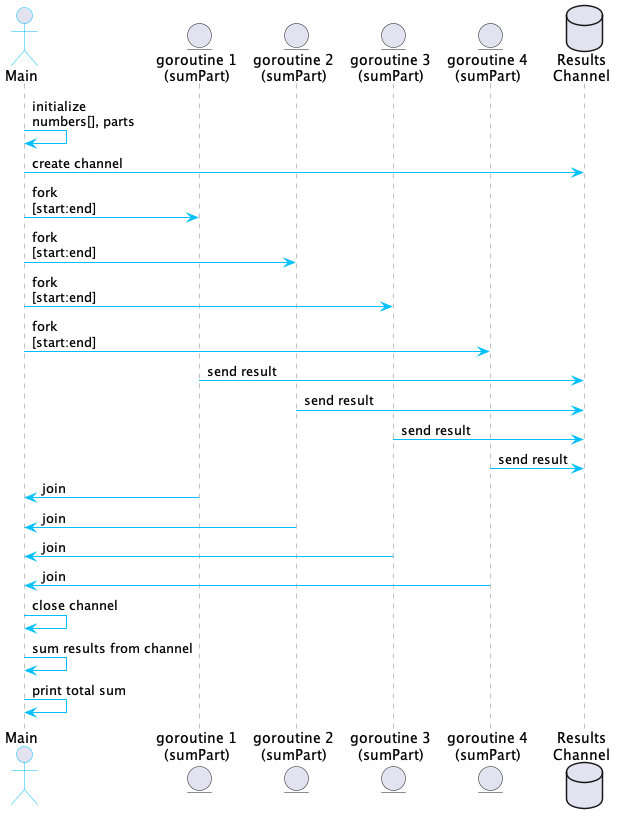
| import (
"fmt"
"sync"
)
var (
parts = 4
)
func main() {
numbers := []int{3, 1, 4, 1, 5, 9, 2, 6, 5, 3, 5} // Example array
totalSum := concurrentSum(numbers, parts) // Divide the array into 4 parts for summing
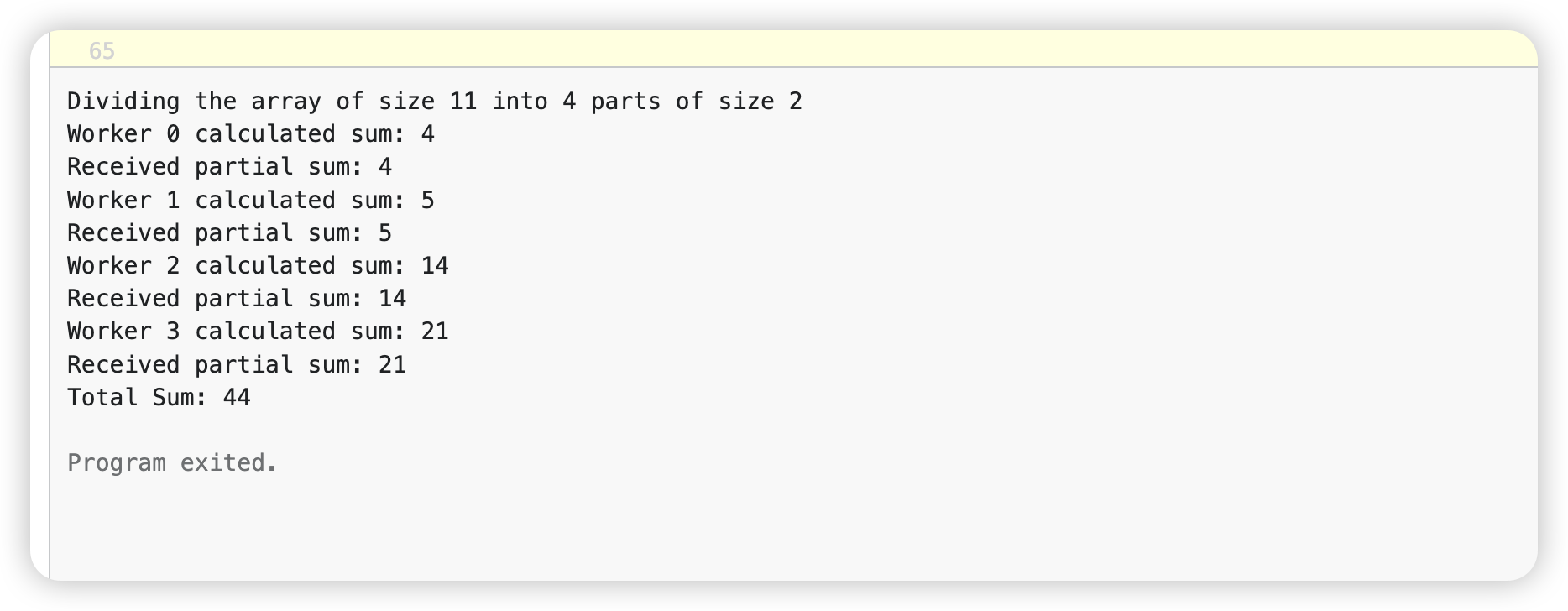
fmt.Println("Total Sum:", totalSum)
}
// sumPart sums a part of the array and sends the result to a channel.
func sumPart(workerId int, nums []int, result chan<- int, wg *sync.WaitGroup) {
defer wg.Done() // Ensure the WaitGroup counter decrements on function completion.
sum := 0
for _, num := range nums {
sum += num
}
fmt.Printf("Worker %d calculated sum: %d\n", workerId, sum)
result <- sum // Send the partial sum to the result channel.
}
// concurrentSum takes an array and the number of parts to divide it into,
// then sums the array elements using concurrent goroutines.
func concurrentSum(numbers []int, parts int) int {
n := len(numbers)
partSize := n / parts // Determine the size of each subarray
fmt.Printf("Dividing the array of size %d into %d parts of size %d\n", n,
parts, partSize)
results := make(chan int, parts) // Channel to collect results with a buffer size
var wg sync.WaitGroup
// Fork step: Launch a goroutine for each part of the array
for i := 0; i < parts; i++ {
start := i * partSize
end := start + partSize
if i == parts-1 { // Ensure the last goroutine covers the remainder of the array
end = n
}
wg.Add(1)
go sumPart(i, numbers[start:end], results, &wg)
}
// Close the results channel once all goroutines are done
go func() {
wg.Wait()
close(results)
}()
// Join step: Combine results
totalSum := 0
for sum := range results {
fmt.Printf("Received partial sum: %d\n", sum)
totalSum += sum
}
return totalSum
}
|